Love Pours Out
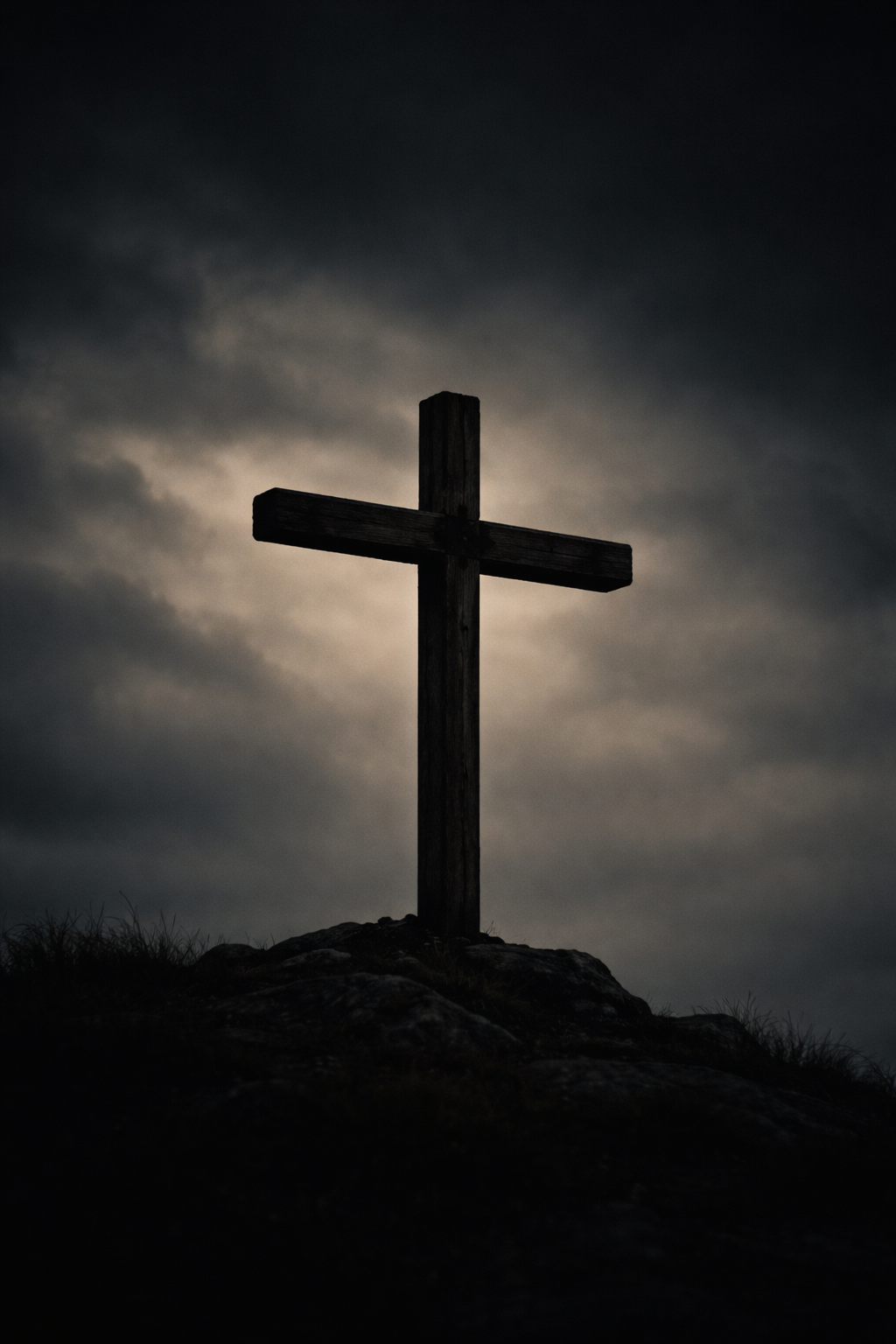
The cross: the love of God on public display
“When he had received the drink, Jesus said, ‘It is finished.’ With that, he bowed his head and gave up his spirit.” John 19:30
I. When Words Reach Their Limit
There are moments in life when words simply run out of gas.
We use the word love for all kinds of things. We love a restaurant. We love a team. We love a song. And then we say, “I love you” to the people who matter most, and sometimes we mean it with everything in us. But eventually, if love is real, words have to become action. Love has to be seen. It has to remain when walking away would be easier. It has to give when holding back would feel safer.
That is why the cross stands at the center of the Christian faith.
The cross is not a piece of jewelry. It is not a religious logo. It is not merely the tragic end of a good man. The cross is the public display of the love of God.
If you are wondering whether God cares about the wreck of your life, you do not answer that question by looking first at your circumstances. You answer it by looking at Calvary.
Because at the cross, love was not merely spoken.
Love was poured out.
II. Love Went Where We Were Trapped
John brings us to Golgotha, the Place of the Skull. We have to be careful not to sanitize this scene with stained glass and soft lighting, because this was not a sanctuary. It was an execution site. It was a place of public shame, official brutality, and the scent of death. It was the landfill of the Roman Empire, the place where people were taken to be forgotten and told that their lives no longer mattered.
And here is the first truth of the gospel: Love goes where the beloved is trapped. In my daily work at the Public Defender Agency, I see what it looks like to be truly trapped. I see people boxed in by case numbers that will not go away. I see identities reduced to a digital file in a government database. I see people weighed down by layers of trauma, addiction, and a shame that systems keep using to define them by what they did at their absolute worst. I see what it looks like when a past refuses to loosen its grip on the present, creating a distance between the life God intended for us and the life we have made for ourselves. No self-help plan, no new leaf, and no sheer force of will can close that gap. Humanity did not need advice. We needed rescue. Jesus did not stand at a distance and shout instructions. He came near. He stepped into the shame and the suffering, entering the place where sin does its darkest work. As Romans 5:8 says, “But God demonstrates his own love for us in this: While we were still sinners, Christ died for us.” Love does not offer sympathy from the safe side of the street. Love moves toward the broken until it is close enough to save.
III. The Vulnerability: The Defendant in the Room
This is the part where I need to be honest with you. It is easy for me to talk about "the people I see" at work. It feels safer to talk about their case numbers, their failures, and their mistakes. It keeps the gospel at arm’s length. But the truth is, I know what it is like to feel trapped, too. I know the weight of a past you feel like you cannot outrun, and the hollow feeling of sitting in the quiet, wondering whether grace really reaches into the corners where you keep your secrets.
There have been moments in my own life, sitting in my car, staring at the dashboard with the engine off, where the Place of the Skull did not feel like a story from an ancient book. It felt like the inside of my own mind. It was the shame of every mistake and every hidden failure replaying itself like a highlight reel I couldn't stop. In those moments, I realized something ugly: my deepest instinct is to try to "lawyer" my way into God’s grace. I want to build a case. I want to explain my motives and justify my actions to prove I am "worthy" of mercy. But the cross is where my case falls apart. It’s where I have to admit I am not the attorney in the room. I am the defendant. And left to myself, I am guilty. I don’t need inspiration or a second chance to perform better. I need a Savior. And I suspect I’m not the only one who knows what that weight feels like.
IV. Love Stayed When He Could Have Walked Away
One of the most staggering truths about the cross is that Jesus stayed there by choice. He was not helpless or overpowered. The same Christ who calmed the storm with a word and called Lazarus out of a grave could have stopped the whole scene in a heartbeat. He could have walked away from the nails, silenced the mockery, and ended the suffering instantly. But He stayed. Love held Him there more firmly than nails ever could. He stayed when every instinct of self-preservation would have screamed, “Enough!”
We live in a world where love is often conditional. People stay as long as it is easy, convenient, or there is little to lose. But when sacrifice becomes costly, people often disappear. But biblical love is not fragile. It is covenantal and enduring. Jesus stayed on that cross because He was more committed to our salvation than to His own relief. As Jesus said, “Greater love has no one than this: to lay down one’s life for one’s friends.”
V. Love Paid What We Could Not Pay
At the center of the cross is this truth: the innocent One stood in the place of the guilty. In the legal world, if you have a record, you carry it. It follows you into rooms you wish you could enter clean, showing up on background checks when you are just trying to move forward. It is a constant reminder of what has been. But at Calvary, Jesus took that record upon Himself. He did not die because He failed. He died because He was bearing our sin. He stood in the place of rebels and absorbed the judgment the rebellion deserved.
That is why the cross is both terrible and beautiful. It is terrible because it shows what sin really costs: It cost the life of the Son of God. But it is beautiful because it shows that God’s love was willing to meet that cost Himself. Mercy did not ignore justice. At the cross, God satisfied justice through the self-giving sacrifice of His Son. Our hope is not in our effort, our image, or our ability to rebuild our lives by force of will. Our hope is in the finished work of Jesus Christ.
Amen.