The Love That Makes Room
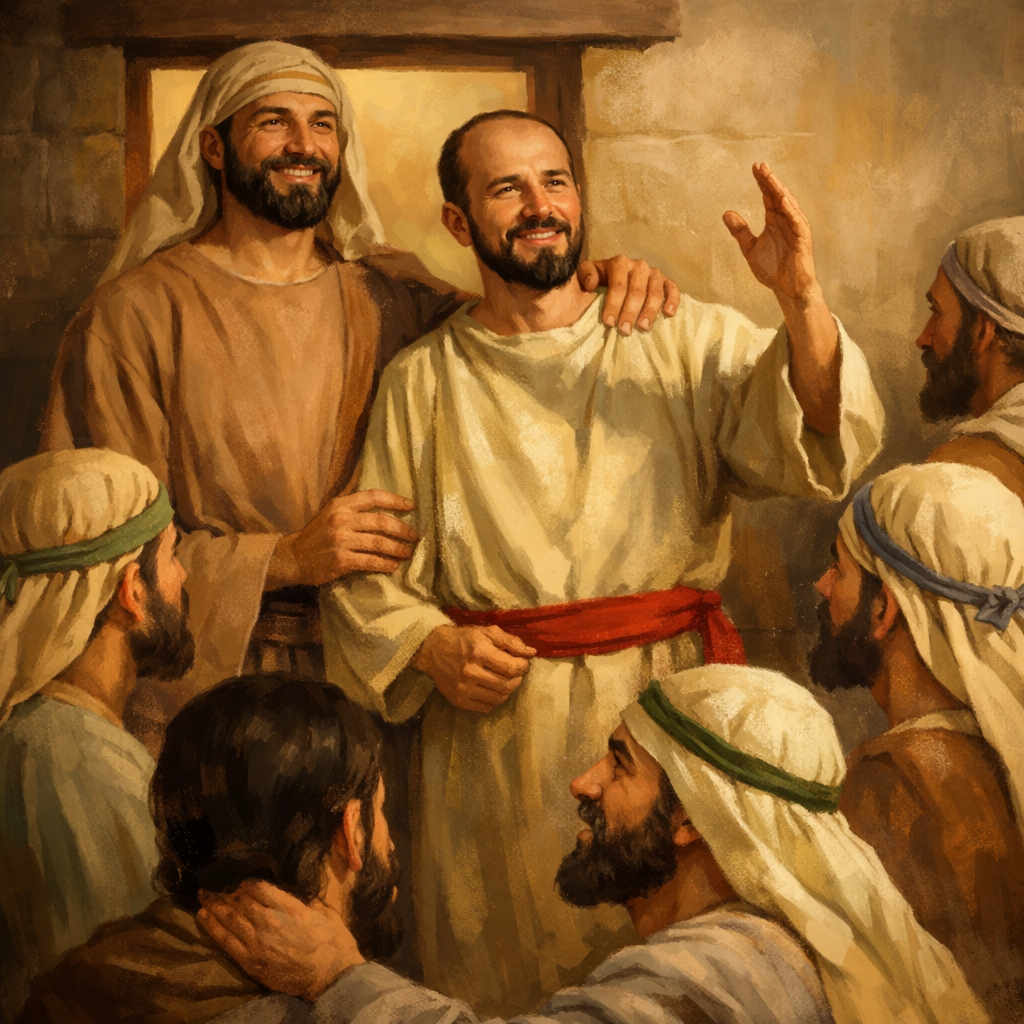
Barnabas sponsors Paul
When he came to Jerusalem, he tried to join the disciples, but they were all afraid of him, not believing that he really was a disciple. But Barnabas took him and brought him to the apostles. He told them how Saul on his journey had seen the Lord and that the Lord had spoken to him, and how in Damascus he had preached fearlessly in the name of Jesus. So Saul stayed with them and moved about freely in Jerusalem, speaking boldly in the name of the Lord. —Acts 9:26-28
I. The Opening: The Safety of the Circle
There is a kind of love that feels holy, but it is often just fear wearing church clothes. It sounds like wisdom, it sounds like discernment, and it sounds like “being careful.”
Please, don’t misunderstand me. Sometimes it is wise to be careful. But if we’re honest, underneath our carefulness, there’s often a question we rarely confess out loud: “What if loving this person costs me?” Acts 9 gives us a story where love costs something real. It shows us what it looks like when love isn’t just a sentiment we admire from a distance, but a risk we take in the real world. This is brotherly love as sponsorship. It’s more than kindness; it’s using your access, your credibility, and your courage to make room for someone else to belong.
II. The Problem: When Fear Builds a Gate
According to Acts 9:26, when Saul came to Jerusalem, he attempted to join the disciples. But they were all afraid of him because they simply did not believe he was a disciple.
Let’s not pretend their fear was irrational. Saul was the face of their trauma. He was the reason some of them had scars, some had attended funerals, and some had been forced to flee their homes. When Saul shows up, the church does exactly what people do when they are trying to survive: they close the circle.
We need to say this clearly. Caution isn’t a sin. A wounded community protecting itself is a natural human response. But here is the danger: fear can easily become a gate. If we aren’t careful, we will call our suspicion “maturity” and use discernment like a deadbolt. But the gospel isn’t just for safe bets. The gospel is for transformed enemies.
III. The Move: “But Barnabas…”
Then we see two words that change the trajectory of the early church: “But Barnabas.” Acts 9:27 tells us that Barnabas took him and brought him to the apostles. Barnabas is known as the “Son of Encouragement,” but don't confuse that with softness. He wasn't being naïve. He was being courageous.
Barnabas didn’t just send Saul a supportive message. He put his own body and his own name next to Saul’s story. Barnabas does for Saul what Saul cannot do for himself: he uses his access to open a door, his credibility to create trust, and his courage to make room.
Sponsorship says: “I will stand with you while trust is rebuilt. I will bridge the distance that fear created, and I will put my name beside you long enough for your fruit to speak for itself.”
IV. The Clarifying Word: Sponsorship Is Not Complicity
We have to be careful here, because this is where people get hurt. Barnabas is not telling the church to ignore harm or pretend that nothing happened. He isn’t demanding that they grant Saul instant, unearned trust.
In fact, the text tells us Saul had already been preaching in Damascus. There was evidence. There was fruit. And let’s be clear: fruit is not charisma. Fruit is repentance, consistency, humility, and a willingness to be held accountable over time.
Sponsorship is not giving a platform to the unrepentant or inviting danger into the lives of the vulnerable. Love makes room for a brother, but love also protects the flock. Barnabas sponsors Saul because he sees evidence that the Holy Spirit is actually at work. That isn't naïveté. That is wisdom filled with hope.
V. The Pattern: Practical Sponsorship
What does this look like in our everyday lives? It’s the Barnabas Pattern:
Investigate Without Cynicism: Don’t ignore the past, but don’t let it be the only thing you see. Sometimes love looks like asking one honest question before you repeat a narrative.
Spend Your Credibility: Who are you willing to vouch for? It might be the person at work everyone gossips about or the new neighbor who feels like an outsider. Brotherly love says, “I will use my access so you don’t have to stand at the door alone.”
Create Proximity: Belonging isn’t a slogan; it’s a structure. It’s saying, “Sit with me,” or “Come to lunch.” It is physically walking someone into a room where they feel invisible and saying, “You’re with me.”
VI. The Result: Love That Keeps Showing Up
In Acts 11, the gospel explodes in Antioch among the Gentiles. When Barnabas goes to check it out, the text says that when he saw the grace of God, he was glad. A cynical heart looks for flaws, but a Barnabas heart looks for grace.
And then he does something that preaches all by itself: he goes to Tarsus to look for Saul. He didn’t just help Saul survive a crisis; he sponsored him into his purpose. Real brotherly love stays with you until you are standing, serving, and becoming who God called you to be.
VII. The Gospel: The Greater Barnabas
Why can we love like this? Because Jesus sponsored us first. And we have to name this tenderly: sometimes we’re Saul, needing mercy and a new beginning. Sometimes we’re the disciples, needing safety and wise boundaries. And sometimes God calls us to be Barnabas, bridging the gap fear created
We were all once outsiders to the holiness of God. Jesus did not stand at a distance waiting for us to prove we were safe; He came toward us while we were still sinners. He entered our condition, took our debt, and carried our shame.
In the truest sense, Jesus is the Greater Barnabas. He brings us to the Father and says: “I vouch for them. Put it on my account. Let them in.” We should sponsor others because we have been sponsored by Christ.
VIII. The Barnabas Question
Who is on the outside of your circle right now? Who needs a “But Barnabas” moment? Who needs someone to stand with them while trust rebuilds?
Are you willing to stop being ruled by fear and start practicing courageous love?
Connection before correction.
Advocacy before assumption.
Room-making before gate-keeping.
Let’s be a community where there is always a seat at the table
Amen.