The Space Between Us: Why Justice Is a Community Responsibility
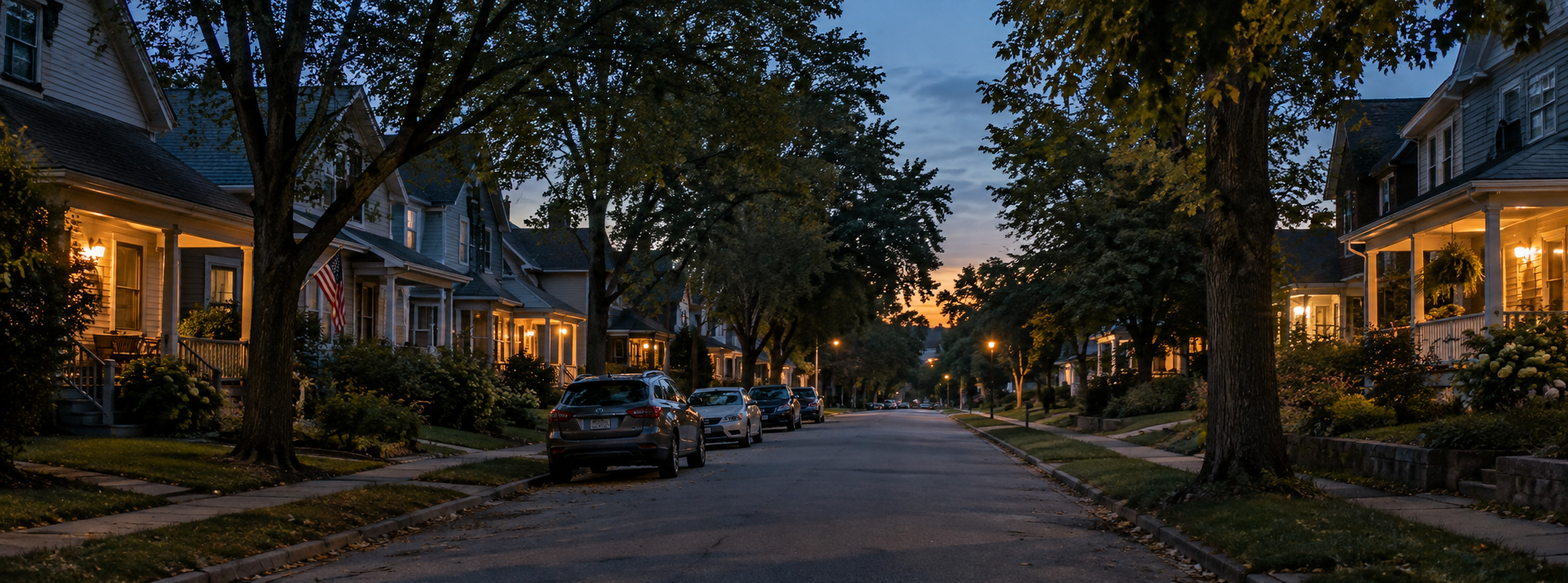
A neighborhood at dusk.
When we talk about criminal justice, the conversation usually centers on two people: the person who was harmed and the person who caused the harm. We want to know what happened. We ask who was responsible and what consequence should follow. That is where justice has to begin, with an honest account of the wound and what it changed.
The damage rarely stays within that narrow circle.
A family adjusts to an absence. Friends may pull away because they do not know what to say. Fear moves through a neighborhood in quieter ways, changing which streets people walk or whether they allow their children to play outside. A congregation may struggle over punishment and mercy. Long after the court has processed the case, people are still living with questions the judgment did not answer.
The community is part of the aftermath. It should also be part of what comes next.
What the Court Cannot Do
We often tell the story of harm as though it began at the moment an offense occurred. Everything before that moment becomes background. The people involved appear as individuals separated from their families, schools, neighborhoods, workplaces, and histories.
That makes for a cleaner story. It is seldom an accurate one.
People make choices, and they remain responsible for those choices. Their surroundings still shape the options they can see and the support available when life begins to fall apart. Untreated trauma, unstable housing, failing schools, isolation, and the absence of meaningful work can narrow a person's world. Many people endure those conditions without hurting anyone. We should still care about the conditions because understanding them may help prevent the next harm.
Strangely, we have no trouble recognizing the influence of other people when someone succeeds. We remember the teacher who paid attention or the neighbor who helped during a difficult month. We may even describe the success as evidence of what a community can accomplish. After someone causes harm, that community tends to disappear from the account. The person's decision becomes the whole explanation.
Looking beyond the decision does not move blame away from the person who made it. It asks the rest of us to consider our responsibility for what follows.
In a criminal case, the government acts in the name of the public. A conviction establishes legal responsibility. A sentence imposes a consequence. Once the proceeding ends, however, families still have to rebuild trust, and the person who was harmed may carry questions that no verdict could answer. The neighborhood has its own recovery ahead.
The public usually moves on.
We follow a case, decide whether the sentence seems fair, and turn our attention elsewhere when the courtroom doors close. The people most affected cannot do that. They remain with the aftermath, often after the attention and support have faded.
The legal system has limits on the other side of the case as well. Most people sent to prison will return. Whether they return prepared to live responsibly will depend in part on what happened during their incarceration. What they encounter afterward matters too. A judge cannot order an employer to take a chance, a landlord to approve an application, or a neighbor to make room at the table.
The law can impose accountability. The rest of the work belongs to all of us.
Why Connection Changes Correction
I have come to describe this as connection before correction.
Correction has the best chance of taking hold within a relationship. Fear can control behavior for a while, and rejection can tell someone where they are no longer welcome. Learning to live differently requires more. Someone has to be close enough to speak honestly and patient enough to see what happens after the conversation.
Years ago, I went through a dark period and pushed people away. Jenn, a friend of mine, kept reaching out. She did not send long speeches or demand that I explain myself. She asked me to write back and let her know I was okay.
For a while, I did not answer.
When I finally wrote, Jenn was simply glad to hear from me. Her response made me face something I had been avoiding. I had treated connection as another source of pain and isolation as protection.
Jenn stayed. That made it possible for me to see the truth without feeling discarded by it.
Connection can have the same effect before a crisis. A young person who trusts a teacher may ask for help sooner. Someone with a dependable place to live has room to think beyond the next night. A mentor who continues showing up can interrupt the expectation that every relationship will eventually end in abandonment.
There are no guarantees in any of this. Communities invest in these relationships because people need places where responsibility can be learned and practiced.
Accountability needs such a place. A person can serve a sentence, complete supervision, and satisfy every formal obligation. None of those accomplishments creates belonging. That happens through ordinary decisions made by employers, landlords, congregations, schools, civic organizations, and neighbors.
The person who was harmed has no obligation to take part in the rehabilitation of the person who caused the harm. Safety comes first, and personal boundaries deserve respect. Forgiveness cannot be demanded. Some relationships should end permanently.
The wider community still has choices to make.
We say people must earn a second chance, then close the places where trust could be earned. A criminal record blocks a job. Without steady income, housing becomes harder to obtain. Exclusion from civic life weakens the relationships that could help someone remain stable. Soon, one barrier is reinforcing another.
Boundaries are sometimes necessary. Certain positions require restrictions, and trust may take years of consistent conduct to rebuild. Yet when every door stays closed, responsible conduct has nowhere to register.
What Repair Asks of Us
Paul describes a community as one body: “If one member suffers, all suffer together with it” (1 Corinthians 12:26). I return to that image because it leaves no one standing safely outside the problem. The suffering of one member affects the whole body.
Care begins with the person who was harmed. The community should help protect that person, acknowledge what happened, and remain available after the legal case is over. It must also confront the conduct that caused the injury. Accountability may require punishment, restitution, treatment, or restrictions that continue for years.
Then comes a harder question. What would repair look like here?
Grace helps us ask that question honestly. It gives full weight to suffering and leaves room to recognize the human worth of the person responsible. Holding both truths at once can be uncomfortable. Public debate offers easier positions: permanent condemnation on one side, quick forgiveness on the other. Neither one asks enough of us.
Retributive justice asks what the person responsible owes because of the harm caused. Restoration keeps that question and adds another: what does the community owe to the work of repair?
The answer will depend on the harm and the people involved. It might mean supporting a family after public attention has disappeared. It could require a neighborhood to examine the conditions it has learned to tolerate. For a person returning from incarceration, repair may begin with a real opportunity to work, find housing, contribute, and rebuild credibility over time.
This work is slow. It can be frustrating. Progress may be difficult to recognize while it is happening.
Still, withdrawal is a decision. A community that offers punishment and no path toward responsible participation should not be surprised when instability continues. Safety grows where people can form dependable relationships, trust the institutions around them, and see a future worth protecting.
Possibility begins with grace. Possibility becomes real through community.
A question for reflection: What door do you control, and what would responsible access to it look like?
______________________________________________
Ministry and Legal Ethics Notice
This reflection is for spiritual and educational purposes. I write as a J.D. Candidate, Registered Paralegal, and ordained minister, not as a licensed attorney. Nothing here constitutes legal advice or creates an attorney client or paralegal client relationship.